
A Guide to Hiring an Architect: Understanding the Design Process
Many people are unfamiliar with what architects do and the vital role they play in bringing a project to life. Architects are not just designers; they serve as a client’s representative throughout the entire design and construction process, helping to navigate its complexities while ensuring the result aligns with the client’s vision, needs, and budget.
Hiring an architect means having a trusted advisor who can translate ideas into functional, aesthetically pleasing spaces while managing regulations, technical requirements, and contractor coordination.
At Ziese Architecture, we recognize that every project is unique. Our goal is to make the architectural process seamless and efficient while delivering innovative, high‑quality designs. Whether you’re embarking on your first project or have prior experience, we guide you through each phase, ensuring informed decisions and a successful outcome.
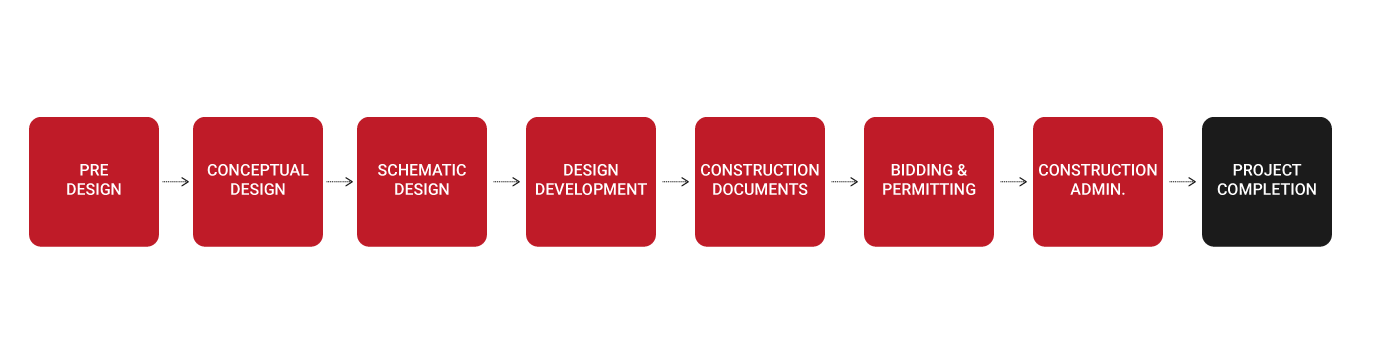
The architectural process is typically divided into distinct phases, allowing work to be clearly scoped, scheduled, and billed as a project progresses. These phases generally include Pre‑Design, Schematic Design (SDs), Design Development (DD), Construction Documents (CDs), Bidding and Permitting, and Construction Administration. Each phase builds on the previous one, with fees allocated according to the level of effort, complexity, and responsibility involved at that stage.
1. Pre-Design & Feasibility Analysis.


Survey and As Built Drawings for Historic Glendale Residence
The first phase is all about gathering information and setting a strong foundation for the project. This includes understanding the client’s vision, conducting site evaluations, and reviewing regulatory requirements. We assess site conditions, zoning restrictions (rules that determine what can be built where), and city regulations to determine project feasibility.
Our team conducts thorough code research (a review of laws and safety standards) to ensure compliance with legal requirements. If challenges arise, we explore alternative solutions, such as variance approvals (special permissions to build outside standard regulations), to make the project viable.
Additionally, we consider environmental and community concerns and engage in discussions with authorities to identify specific project requirements. This phase generally results in drawings of the site and its existing conditions.
Deliverables:
Site analysis report (study of existing site conditions)
Zoning and jurisdictional requirements identification
Preliminary code research
Feasibility study and recommendation report
As-Built drawings (drawings of what is already on the site if applicable)
Site survey (drawing showing topography and site features)
2. Concept Design.
During this phase, we establish the project’s form and function. We develop preliminary floor plans (top‑down views of the building’s layout), define spatial organization (how spaces relate to one another), and study the building’s overall massing (the general size and shape of the building) to ensure the design aligns with the client’s vision.
Through this process, we produce conceptual drawings that explore layout, scale, and spatial relationships. These early studies form the basis of the design and will be tested, refined, and developed further in subsequent phases.


Examples of Spatial Relationship Diagrams
Deliverables:
Planning and zoning requirement identification
Spatial relationship diagrams (bubble diagrams, which show how spaces connect)
Architectural conceptual site plan (a rough layout of the building on the property)
Conceptual floor plans
Conceptual exterior elevations (flat drawings that show what the outside will look like)
3. Schematic Design.
This phase refines the conceptual design into a clear, structured architectural plan. We develop CAD‑based, dimensioned drawings(computer‑generated drawings with precise measurements) that define project components within site constraints, regulatory guidelines, and the owner’s program.
These drawings establish key spatial relationships and include approximate dimensions, areas, and volumes, allowing the design to be evaluated in greater detail. Through additional analysis and coordination, we confirm that the project meets functional needs, aesthetic goals, and regulatory requirements before advancing to the next phase.


Project Visualization by Collaborator NVision
Deliverables:
Code analysis
CAD-scale drawings
Architectural site plan
Floor plans
Interior elevations (drawings that show vertical spaces inside the building)
Key architectural details (specific construction features and materials)
Perspective drawings or 3D models
4. Design Development.
At this stage, technical building systems—including mechanical, electrical, plumbing, and structural systems—are fully integrated into the design. The architectural drawings are further refined to incorporate material selections, finishes, and construction details, ensuring the project is structurally sound and functionally coordinated.
Close coordination with engineering consultants is critical during this phase to confirm that all building systems work together seamlessly. We also prepare outline specifications (a preliminary list of materials and construction methods) to establish the quality levels and performance criteria for major building components.


Example of Construction Drawing Set for Historic Glendale Residence
Deliverables:
Updated CAD scale drawings:
Architectural site plan
Floor plans
Reflected ceiling plan (shows lighting and ceiling elements)
Interior elevations
Exterior elevations
Building and wall sections (drawings that cut through a structure to show details)
Key architectural details
Outline specifications for materials and finishes
5. Construction Documents.
In this phase, we prepare comprehensive construction drawings required for permitting and contractor bidding. These highly detailed documents ensure compliance with building codes and help streamline the approval process with city and reviewing agencies.
The construction documents provide contractors with the clear, coordinated information needed to accurately price, permit, and construct the project as designed, reducing ambiguity and minimizing potential issues during construction.


Examples of Architectural Details
Deliverables:
Architectural Details
6. Bidding & Permitting Assistance.
In this phase, we assist clients in selecting the right contractor by soliciting, reviewing, and evaluating competitive bids (pricing proposals from qualified builders). This process helps ensure bids are accurate, comparable, and aligned with the project scope.
We also manage the permitting process, coordinating with city officials and consultants to help expedite approvals. Our experience with regulatory requirements and review procedures supports a smooth transition from design to construction.
As part of this effort, we prepare and submit responses to city comments and attend meetings with building departments, as required, to support the project through final approvals.
Deliverables:
Optional: Coordination with permit expediter (a professional who speeds up permit approvals)
Responses to city comments related to architectural drawings
Attendance at final back-check meetings for building department approval
7. Construction Administration.
During construction, Ziese Architecture provides ongoing support, acting as the client’s advocate to ensure the project is executed in accordance with the design intent and construction documents. We collaborate closely with contractors and consultants, address unforeseen conditions, and help resolve issues that arise during construction.
We conduct site visits to observe progress and verify general conformance with the construction documents. Our role during this phase is to maintain quality control, manage clarifications, and ensure that any necessary modifications remain aligned with the original design intent and project goals.


Construction Images Taken of Larchmont Residence and Stronghold Climbing Gym, Lincoln Heights
Deliverables:
Site visits to review construction progress
Coordination with contractors and consultants
Review of contractor submittals (shop drawings, product data, material samples)
Responses to Requests for Information (RFIs—questions from contractors needing clarification)
Review of change orders (modifications to the original design and budget) for consistency with design intent
9. Our Integrated Project Delivery Approach.
We employ Integrated Project Delivery (IPD), a collaborative project approach endorsed by the American Institute of Architects (AIA). IPD brings together architects, owners, and contractors early in the design process to improve coordination, optimize efficiency, and reduce waste.
By incorporating real‑time cost and scheduling feedback into the design process, we help ensure that approved plans remain aligned with budget and timeline expectations. This collaborative approach reduces redesigns, limits unexpected construction costs, and leads to more predictable project outcomes during construction.
Get Started with Ziese Architecture.
Embarking on an architectural project can feel overwhelming, but with a clear understanding of the process, clients can make informed decisions with confidence. At Ziese Architecture, we are committed to guiding our clients through each phase, ensuring a seamless and rewarding experience from concept through completion.
If you’re ready to start your project, we invite you to contact us to schedule a consultation and explore how we can bring your vision to life.